Fulani Braids With Beads: A Protective Style That Frames The Face Beautifully
Published on February 5, 2026
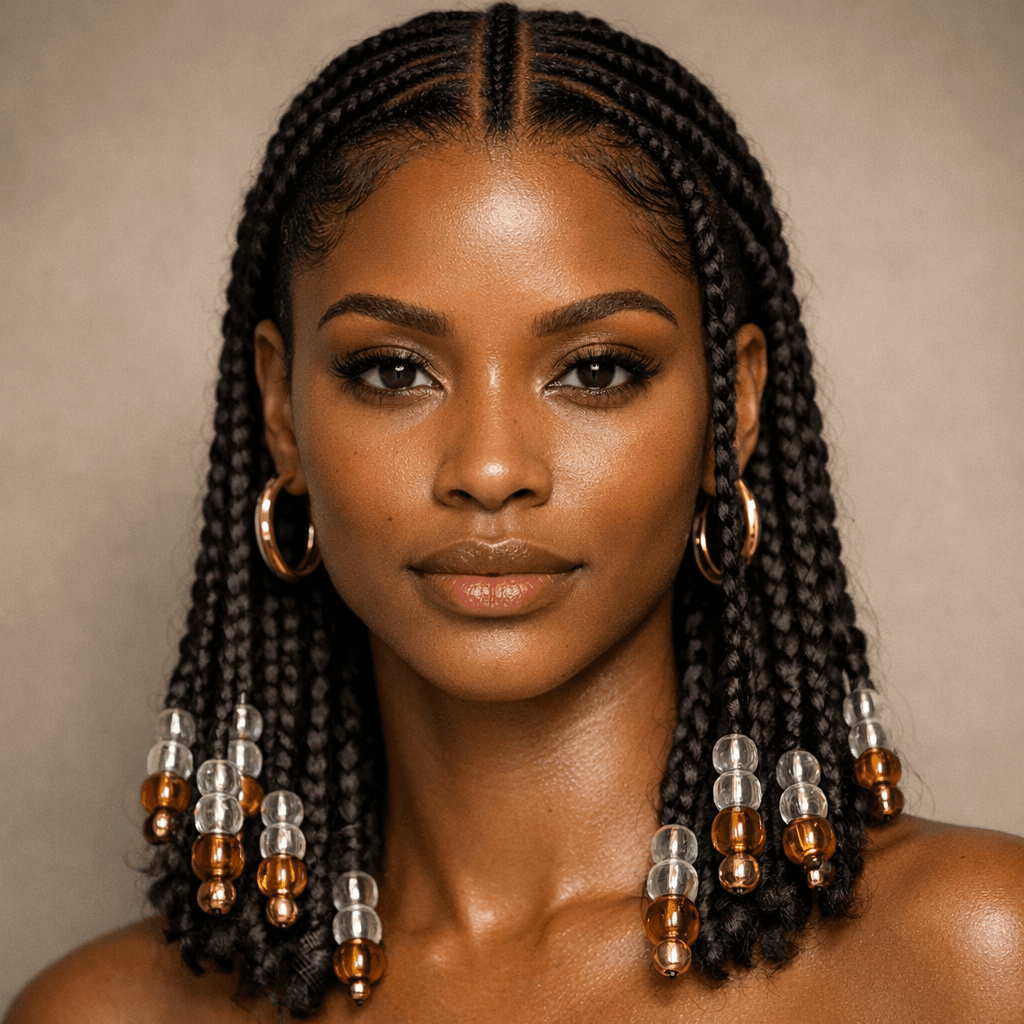
Fulani Braids With Beads: A Protective Style That Frames The Face Beautifully
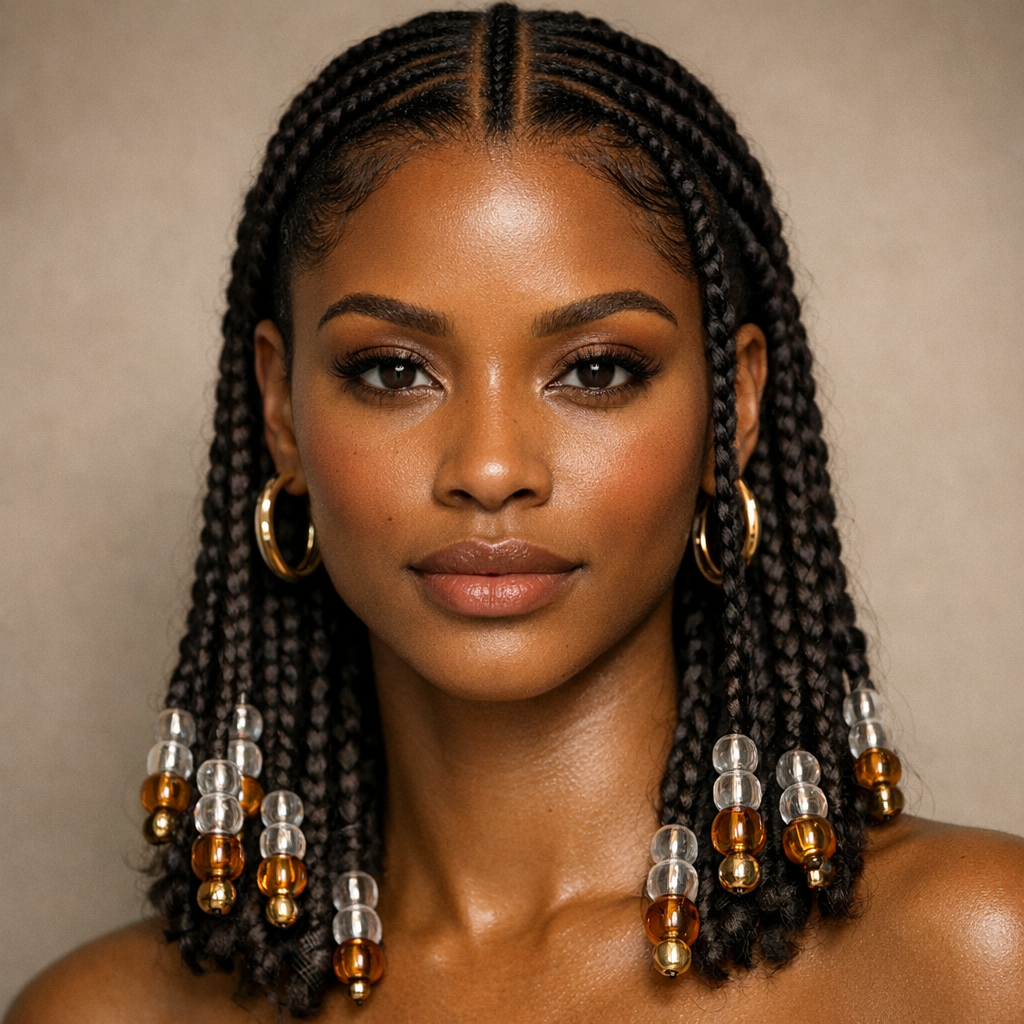
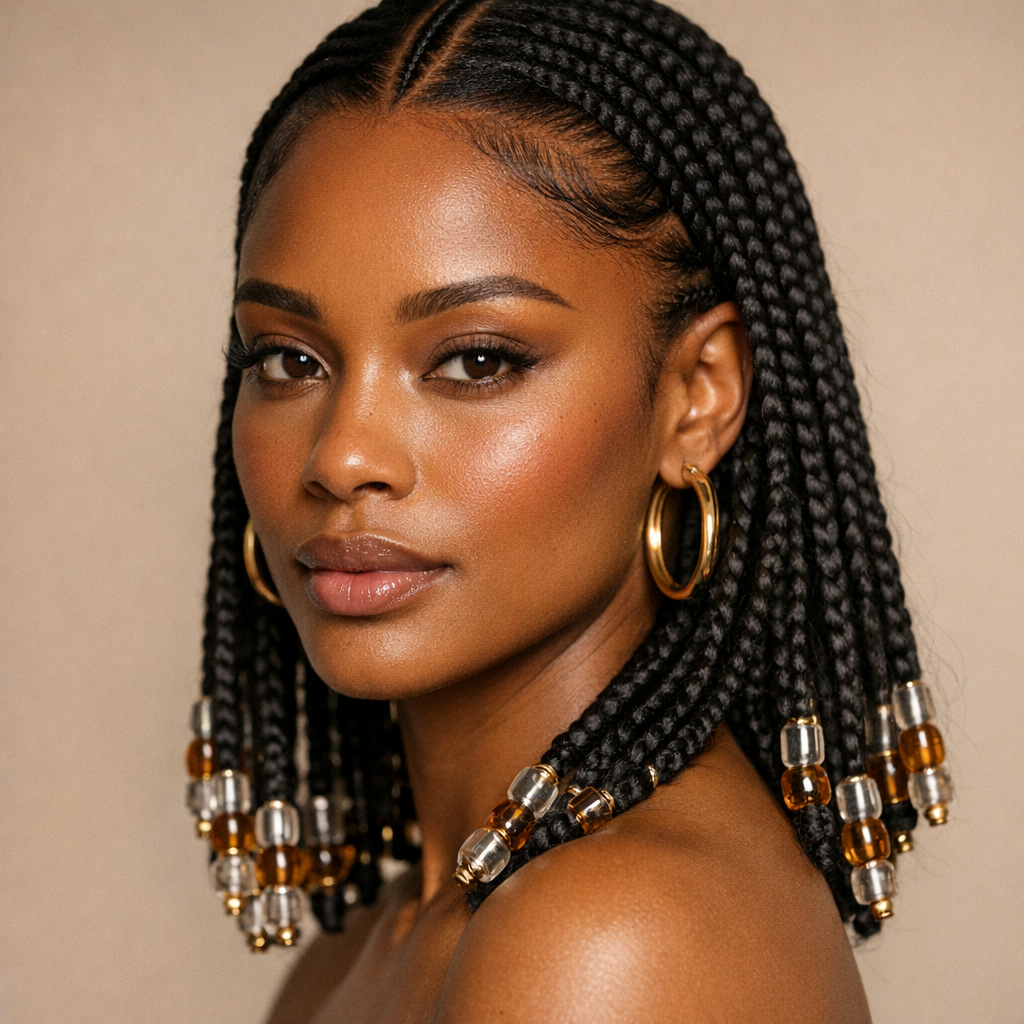
Fulani braids with beads are a classic, face-framing protective style that blends sleek cornrow detail with free-hanging braids finished in beads. If you’re searching for a braided look that feels cultural, versatile, and photo-ready (without committing to a full head of uniform box braids), this style hits the sweet spot.
Table of Contents
- Quick Specs
- Key Takeaways
- What Are Fulani Braids with Beads?
- Why It’s a Top Protective Style
- Styling Tips (So the Beads Look Intentional)
- Maintenance + Scalp Care Routine
- How to Ask Your Barber/Stylist
- Common Mistakes to Avoid
- Variations to Try
- Who It Suits (and Who Should Avoid It)
- Explore More Braided Looks
- Try It On Before You Commit
- FAQ
- Final Thoughts
- Ideal Hair Type and Face Shape
- Pros and Cons
- Explore More
Quick Specs
- Typical length: chin to waist (most popular: shoulder to mid-back)
- Vibe: boho-meets-traditional, polished, expressive
- Best face shapes: oval, round, heart, diamond (easy to customize with parting)
- Hair types: works best for Type 3–4; can be adapted for Type 2 with the right prep and grip
- Protective level: high when installed with low tension and proper scalp care
Key Takeaways
- Fulani braids pair cornrows + individual braids, often with a signature center braid.
- Beads add personality but should be light enough to avoid pulling.
- Expect 3–6 weeks of wear with good maintenance.
- Healthy results depend on tension control, edge safety, and scalp care.
- You can cleanse your scalp while wearing them—focus on diluted wash + thorough drying.
What Are Fulani Braids with Beads?
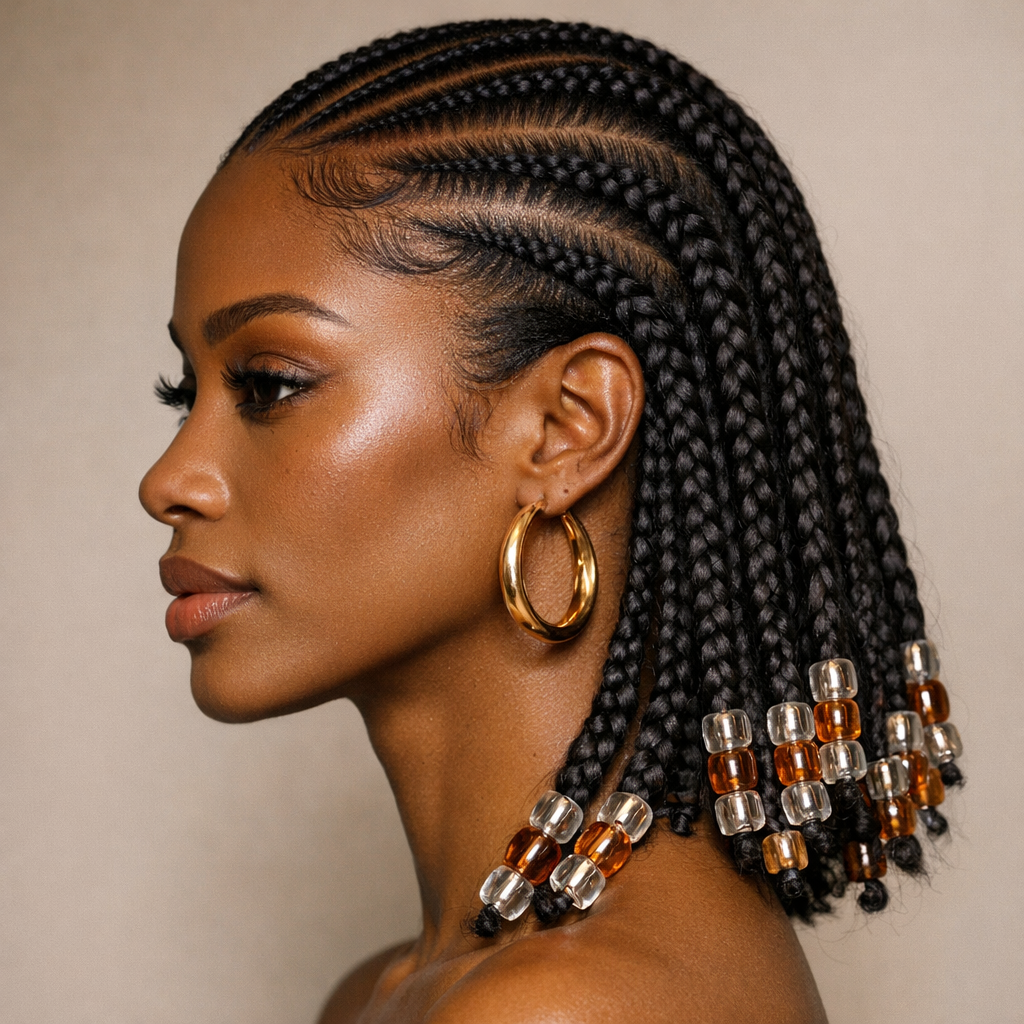
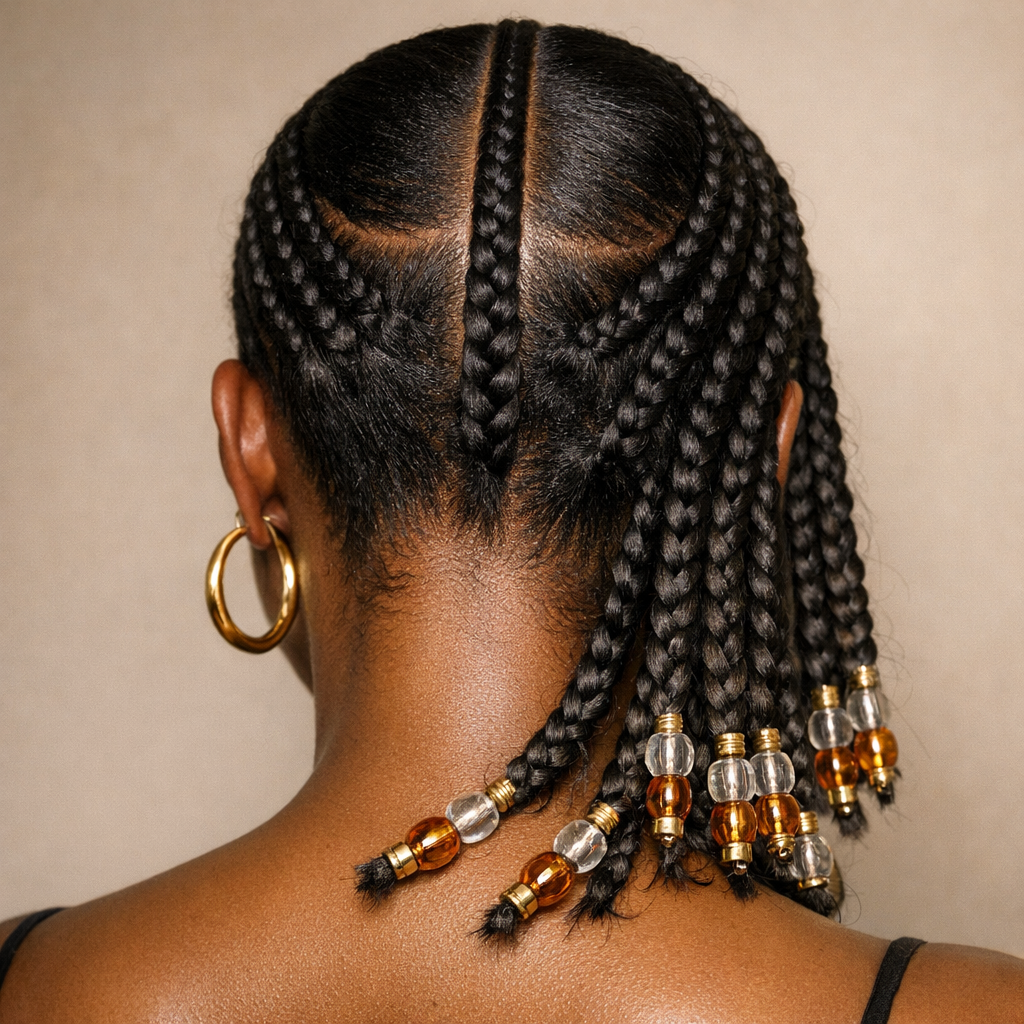
Fulani braids are inspired by traditional styles worn by the Fulani people of West Africa. Modern versions typically feature:
- A center cornrow (or a few neat cornrows) running front to back
- Side cornrows feeding into individual braids
- Free-hanging braids (similar in feel to box braids) around the perimeter
- Beads or cuffs at the ends for finish and movement
Compared with knotless braids, Fulani braids often include more visible scalp patterning (cornrows/parts) and can look more “designed.” Compared with full box braids, they’re usually lighter and faster to style because the top structure does some of the visual work.
Why It’s a Top Protective Style
In the protective styles category, Fulani braids earn their spot because they:
- Keep daily manipulation low
- Help retain length when installed and removed correctly
- Protect ends (especially when sealed with beads or wrapped ends)
- Style quickly—ponytails, buns, half-up looks, or leaving the beads down
The key is installation: protective doesn’t mean “tight.” If your scalp feels sore or you notice bumps along the hairline, that’s a red flag for excessive tension.
Styling Tips (So the Beads Look Intentional)
Everyday styling ideas
- Half-up, half-down: show off the center braid pattern while keeping hair off your face.
- Low ponytail: sleek and professional; use a soft scrunchie to reduce friction.
- High bun/top knot: best for medium to long lengths; keep edges protected with a satin wrap at night.
- Side sweep: highlights the beads and frames cheeks beautifully.
Bead placement tips
- Keep beads evenly distributed across the ends so the weight is balanced.
- Choose bead size based on braid thickness:
- Small beads for small/medium braids
- Medium beads for medium/large braids
- If you’re sensitive to pulling, ask for fewer beads or lighter acrylic instead of heavy metal.
Want it softer like twists?
If you love the vibe of twists but want the Fulani layout, you can request twist ends (or even individual passion twists) with cornrow detailing on top.
Maintenance + Scalp Care Routine
Fulani braids look best when the scalp stays clean and the braids stay smooth. A simple weekly routine usually beats complicated product layering.
1) Cleanse (1–2x weekly)
- Use a diluted shampoo in an applicator bottle.
- Apply directly to the scalp, massage gently with fingertips, and rinse thoroughly.
- Keep friction low to reduce frizz.
2) Dry completely (same day)
Moisture trapped at the roots can cause odor, itch, or mildew. After washing:
- Blot with a microfiber towel
- Air-dry fully, or use a blow dryer on low/medium heat
3) Moisturize strategically (2–4x weekly)
- Use a light scalp oil (a few drops, not a drench) or a soothing scalp serum.
- If your scalp is flaky, prioritize cleansing over adding heavier oils.
4) Protect at night (every night)
- Satin bonnet or scarf + satin pillowcase
- If beads clack or catch, put braids into a loose pineapple and wrap the hairline.
Product suggestions (choose 1 per category)
| Need | What to look for | Why it helps | |---|---|---| | Scalp cleanse | Diluted, sulfate-free shampoo or braid/scalp cleanser | Removes buildup without roughing up braids | | Scalp calm | Tea tree/mint or witch hazel-based scalp tonic | Reduces itch and keeps parts fresh | | Moisture | Lightweight oil (jojoba, grapeseed) or braid spray | Hydrates without heavy residue | | Hold/edges | Alcohol-free edge control or aloe gel | Smooths hairline without flaking |
How to Ask Your Barber/Stylist
Bring 2–3 reference photos and use clear language. Try these talking points:
- “I want Fulani braids with beads—cornrows on top feeding into individual braids.”
- “Please keep the tension low, especially around my edges and temples.”
- “I prefer medium braids with clean parts; not too small.”
- “Add beads mainly at the ends—lightweight beads only so they don’t pull.”
- “Can you leave my hairline natural and avoid tight edge braids?”
- “I’d like a knotless start on the individual braids if possible for a flatter, lighter feel.”
If you’re deciding between box braids and this look, ask your stylist which option will feel lighter on your scalp based on your density and sensitivity.
Common Mistakes to Avoid
- Installing too tight: soreness, bumps, and edge thinning aren’t normal. Speak up immediately.
- Overloading beads: too many or too heavy beads can tug at roots and cause breakage.
- Skipping scalp cleansing: buildup leads to itch and dull-looking parts.
- Letting braids stay in too long: keeping them past 6–8 weeks often causes matting and shedding issues.
- Rough takedown: cut only extension hair, detangle gently, and deep condition after removal.
Variations to Try
- Fulani knotless braids with beads: knotless bases for a flatter, lighter finish.
- Fulani box braids hybrid: more individual braids, fewer cornrows—great if you love uniform fullness.
- Fulani braids into a braided ponytail: cornrows feed into a high or mid pony for a snatched look.
- Fulani braids with curly ends: swap beads for curls (or do beads on some braids only).
- Fulani twists with beads: twist lengths instead of braids for a softer, ropey texture.
Who It Suits (and Who Should Avoid It)
Great for you if…
- You want a protective style that highlights your face and cheekbones
- You like accessories and want a style that looks “finished” with minimal effort
- You’re growing your hair and need a low-manipulation routine
Consider another option if…
- You have an extremely sensitive scalp or active irritation—opt for larger parts, fewer braids, or a shorter wear time
- You’re experiencing edge thinning—ask for minimal tension at the hairline, fewer beads, or try a wig/protective updo instead
- You can’t commit to drying after washes—beads + moisture left in braids can cause odor and frizz
Explore More Braided Looks
If you’re browsing similar styles, head to our hairstyles hub to compare braids, twists, and other protective options. You can also return to the home page to start your try-on journey.
Try It On Before You Commit
Fulani braids with beads can look dramatically different depending on braid size, parting pattern, and bead color. Before you book, use InstaHair’s virtual try-on to preview lengths and finishes—so you walk into your appointment knowing exactly what you want.
FAQ
How long does a the hairstyle take to install?
Most installs take 3–6 hours. Small braids, intricate parting, and lots of beads push it longer.
How long does a the hairstyle last?
Expect 3–6 weeks. Longevity depends on braid size, how fast your hair frizzes, and whether your stylist used low-tension techniques.
How do I care for my scalp with a the hairstyle?
Prioritize scalp care: cleanse 1–2x weekly with diluted shampoo, follow with a light tonic or a few drops of oil, and avoid heavy product buildup.
Can I wash my hair with a the hairstyle?
Yes. Wash your scalp, not the full length aggressively. Rinse well and dry completely to prevent itch, odor, and frizz.
Are Fulani braids safe for edges?
They can be—if your stylist keeps tension low, avoids tight edge braids, and you keep bead weight reasonable. If you feel persistent pain, remove or adjust them.
Final Thoughts
The Fulani braids is a confident, low-fuss style that looks sharp with minimal effort. If you want to preview it before you commit, try it on with InstaHair.
Ideal Hair Type and Face Shape
| Hair Type | Face Shape | Why It Works | | --- | --- | --- | | Straight to wavy | Oval, square | Shows off the texture and clean lines | | Wavy with medium density | Round, heart | Adds height and balance at the crown | | Curly (looser curls) | Oval, diamond | Keeps shape while reducing bulk |
If you are unsure, bring reference photos and ask your stylist how to tailor the Fulani braids.
Pros and Cons
Pros: easy upkeep, modern shape, quick styling
Cons: needs regular trims, not ideal for very tight curls
Explore More
Fulani Braids with Beads: A Protective Style That Frames the Face Beautifully Hairstyle Gallery